




Artificial Intelligence Is Creating the Biggest Business Opportunity Since the Internet
Artificial intelligence is no longer an experimental technology reserved for large corporations or research labs. In 2026, it has become one of the biggest economic opportunities for entrepreneurs, freelancers, startups, agencies, and creators worldwide.
Just as the internet created thousands of new businesses in the late 1990s and smartphones transformed industries in the 2010s, AI is now driving an entirely new generation of companies. From solo founders building AI-powered SaaS products to agencies automating business workflows, the barriers to launching a profitable technology business have never been lower.
What makes this shift remarkable is accessibility. A decade ago, building an AI company required teams of machine learning engineers, expensive infrastructure, and years of research. Today, powerful AI models and development platforms allow individuals and small teams to create products that once required millions of dollars in investment.
Businesses are actively looking for ways to integrate AI into their operations. They need solutions that save time, reduce costs, improve productivity, and create better customer experiences. Entrepreneurs who can solve these problems have an opportunity to build sustainable businesses in one of the fastest-growing markets in the world.
This guide explores 25 of the best AI business ideas for 2026, explains how each business model works, discusses its advantages and challenges, and highlights the tools that can help bring these ideas to life. Whether you’re an aspiring founder, freelancer, developer, consultant, or content creator, you’ll find practical ideas that match different budgets, skill levels, and long-term goals.
Why AI Businesses Are Growing Faster Than Ever
The rapid growth of AI is not driven by hype alone. Several structural changes are accelerating adoption across nearly every industry.
AI Has Become Affordable
Many of the world’s leading AI platforms now offer affordable subscription plans and developer APIs, making advanced capabilities accessible to startups and independent professionals. Instead of building machine learning models from scratch, businesses can integrate existing models into their products and focus on solving customer problems.
Businesses Need Automation
Companies face increasing pressure to improve efficiency while controlling costs. AI-powered automation can reduce repetitive work, assist employees, and streamline operations, making automation one of the strongest drivers of AI adoption.
Every Industry Can Benefit
Healthcare, education, finance, marketing, legal services, software development, customer support, manufacturing, and creative industries are all investing heavily in AI solutions. This diversity creates opportunities for specialized startups rather than requiring entrepreneurs to compete directly with major technology companies.
AI Enables Small Teams to Scale
Modern AI tools allow founders to accomplish work that previously required entire departments. A single entrepreneur can now build products, write marketing content, create videos, develop software, design graphics, analyze data, and provide customer support with the assistance of AI.
Choosing the Right AI Business Idea
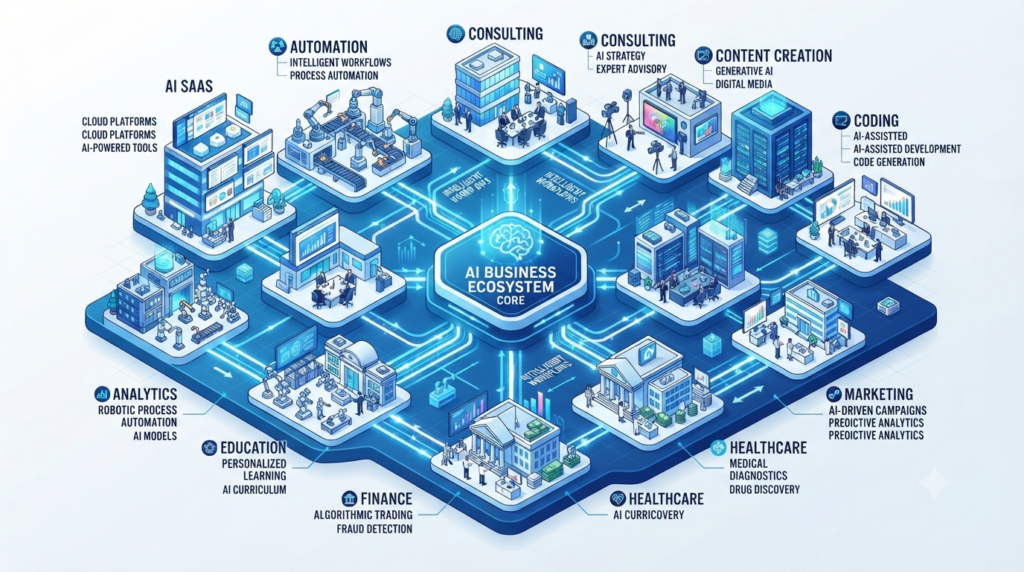
Not every AI business is suitable for every entrepreneur. Before selecting an idea, consider several important factors.
Skills
Do you have technical expertise, marketing experience, industry knowledge, or creative skills? The best business idea often combines AI with knowledge you already possess.
Budget
Some AI businesses require little more than a laptop and software subscriptions, while others involve product development, cloud infrastructure, or larger teams.
Market Demand
Look for real business problems rather than interesting technology. Companies pay for solutions that save money, increase revenue, reduce risk, or improve productivity.
Scalability
Subscription software, digital products, and automation services generally scale more easily than businesses that rely entirely on one-on-one consulting.
Competition
Highly competitive markets can still provide opportunities if you specialize in a niche audience or offer unique value that larger competitors overlook.
Comparison: Which AI Business Model Fits You?
| Business Type | Startup Cost | Difficulty | Scalability | Revenue Potential |
|---|---|---|---|---|
| AI SaaS | Medium–High | High | Excellent | Excellent |
| AI Agency | Low | Medium | High | High |
| AI Consulting | Low | Medium | Medium | High |
| AI Automation Services | Low | Medium | High | High |
| AI Content Business | Low | Low | Medium | Medium–High |
| AI Digital Products | Low | Low | Excellent | High |
| AI Education | Low | Medium | High | High |
| AI Plugins & Extensions | Medium | High | Excellent | High |
The 25 Best AI Business Ideas for 2026

1. Build an AI SaaS Product

For many entrepreneurs, launching an AI Software-as-a-Service (SaaS) product represents the most scalable and valuable business opportunity in today’s market.
Instead of selling hours of work, SaaS businesses sell ongoing access to software through monthly or annual subscriptions. This recurring revenue model creates predictable cash flow and allows companies to grow without increasing labor proportionally.
Modern AI APIs make it possible to build powerful software without developing proprietary language models. Entrepreneurs can combine existing AI technologies with unique workflows or industry-specific expertise to solve targeted problems.
Examples
- AI meeting assistant
- AI resume builder
- AI legal document assistant
- AI marketing platform
- AI research assistant
- AI CRM assistant
- AI project management tool
Target Customers
- Small businesses
- Marketing agencies
- HR teams
- Legal firms
- Startups
- Consultants
Revenue Model
- Monthly subscriptions
- Annual plans
- Enterprise licensing
- API usage pricing
Pros
- Recurring revenue
- High scalability
- Global customer base
- Strong company valuation potential
Challenges
- Competitive market
- Customer acquisition costs
- Continuous product development
- Technical maintenance
Recommended AI Stack
- OpenAI API
- Anthropic API
- Google Gemini API
- Vector databases
- Automation platforms
- Cloud hosting
2. Start an AI Automation Agency
Not every business wants to build AI tools—they simply want someone to implement them.
This creates enormous opportunities for AI automation agencies that help organizations automate repetitive tasks, connect AI services, and redesign business workflows.
Many companies understand that AI can improve productivity but lack the technical knowledge to deploy it effectively. Agencies bridge that gap by designing custom automation solutions using existing AI platforms and workflow tools.
Services You Can Offer
- Customer support automation
- Email workflow automation
- CRM integrations
- AI-powered reporting
- Document processing
- Sales automation
- Internal knowledge assistants
- AI chatbot deployment
Ideal Clients
- Small businesses
- Marketing agencies
- Healthcare clinics
- Law firms
- Accounting firms
- E-commerce companies
Revenue Streams
- Setup fees
- Monthly retainers
- Consulting packages
- Maintenance contracts
Why This Business Is Attractive
Compared with SaaS, agencies require less upfront investment and can generate revenue quickly. As expertise grows, many agency owners eventually develop their own AI software products.
3. Launch an AI Consulting Business
As organizations race to adopt artificial intelligence, many executives face the same challenge: they understand AI’s potential but struggle to determine where to begin. This uncertainty has created strong demand for AI consultants who can translate complex technology into practical business strategies.
Unlike agencies that primarily implement solutions, AI consultants focus on assessment, planning, and decision-making. They help companies identify high-impact use cases, evaluate tools, estimate return on investment, develop AI roadmaps, and guide adoption while minimizing risk.
Services You Can Offer
- AI readiness assessments
- AI strategy workshops
- Technology selection
- Workflow optimization
- Employee training
- Governance and responsible AI guidance
- Vendor evaluation
- AI implementation roadmaps
Target Clients
- Small and medium-sized businesses
- Enterprise departments
- Startups
- Educational institutions
- Government organizations
- Non-profit organizations
Revenue Models
- Hourly consulting
- Fixed-price strategy projects
- Executive workshops
- Monthly advisory retainers
- Corporate training programs
Advantages
- Low startup costs
- High-value engagements
- Opportunity to build long-term client relationships
- Can evolve into an agency or SaaS business over time
Challenges
- Requires strong communication and domain expertise
- Success depends heavily on credibility and case studies
- Continuous learning is essential as AI evolves rapidly
Recommended AI Stack
- ChatGPT Enterprise or Team
- Claude
- Google Gemini
- Microsoft Copilot
- Workflow automation platforms
- Analytics and documentation tools
4. Start an AI Content Agency

Content marketing remains one of the most effective ways for businesses to attract customers, but producing high-quality content consistently is expensive and time-consuming. Artificial intelligence has fundamentally changed this landscape by allowing agencies to deliver more content, faster, without sacrificing quality when combined with skilled human editors.
An AI content agency doesn’t simply generate articles with AI. Its real value lies in combining AI-assisted production with editorial expertise, SEO strategy, fact-checking, and brand voice management. Businesses are increasingly looking for agencies that can create blogs, newsletters, landing pages, product descriptions, social media content, email campaigns, and long-form guides at scale.
Instead of replacing writers, AI allows agencies to increase productivity while maintaining human oversight for quality, originality, and accuracy.
Services You Can Offer
- SEO blog writing
- Landing page copy
- Product descriptions
- Email marketing campaigns
- LinkedIn ghostwriting
- Newsletter creation
- Content strategy
- Content refresh services
- AI-assisted localization
- AI-powered content audits
Ideal Clients
- SaaS companies
- E-commerce brands
- Marketing agencies
- Startups
- B2B software companies
- Local businesses
- Publishers
Revenue Models
| Service | Pricing Model |
|---|---|
| Blog Writing | Per article |
| Monthly Content Package | Subscription |
| SEO Strategy | Fixed Project |
| Content Refresh | Per page |
| Newsletter Management | Monthly Retainer |
Estimated Startup Cost
Low
Most founders only need:
- Website
- Portfolio
- AI subscriptions
- Project management software
Recommended AI Stack
- ChatGPT
- Claude
- Gemini
- Grammarly
- Notion AI
- Perplexity
- Surfer SEO
- Ahrefs
Advantages
- Low startup costs
- High recurring revenue potential
- Easy to scale
- Growing demand
Challenges
- Building trust
- Maintaining quality
- Standing out in a crowded market
VEE Insight
The agencies that will dominate the next decade won’t be the ones using AI the most—they’ll be the ones combining AI efficiency with exceptional editorial quality and deep industry expertise.
5. Build and Sell AI Digital Products
One of the most profitable AI business models is creating digital products that can be sold repeatedly without additional production costs.
Unlike service businesses, digital products generate revenue long after they are created. AI has dramatically accelerated the production of ebooks, prompt collections, templates, spreadsheets, online courses, design assets, and workflow systems.
This business model is particularly attractive because it offers high profit margins and can evolve into a broader educational or SaaS ecosystem.
Examples of AI Digital Products
- Prompt libraries
- Notion templates
- Marketing templates
- Business plan templates
- AI workflow kits
- Resume templates
- Presentation templates
- AI image prompt packs
- Automation blueprints
- PDF guides
Where to Sell
- Personal website
- Gumroad
- Lemon Squeezy
- Etsy (for eligible digital products)
- Creative Market
- Shopify
Revenue Model
- One-time purchases
- Bundles
- Membership access
- Subscription libraries
Startup Cost
Very Low
Growth Potential
Excellent
Once an audience is established, digital products can generate recurring income with minimal ongoing costs.
Recommended AI Stack
- ChatGPT
- Claude
- Canva
- Gamma
- Notion AI
- Midjourney
- Adobe Firefly
Advantages
- Passive income potential
- High margins
- Global audience
- Easy to expand product catalog
Challenges
- Building an audience
- Marketing consistently
- Preventing unauthorized redistribution
6. Create an AI Education Business
The rapid adoption of AI has created an enormous skills gap. Millions of professionals want to learn how to use AI effectively, but many struggle to find practical, beginner-friendly education.
This demand creates opportunities for entrepreneurs who can teach AI through structured learning experiences.
Education businesses can serve students, professionals, companies, or entire organizations.
Products You Can Offer
- Online courses
- Cohort-based programs
- AI bootcamps
- Corporate workshops
- Certification programs
- Webinars
- Community memberships
Target Markets
- Students
- Marketing professionals
- Developers
- Teachers
- Entrepreneurs
- Business executives
Revenue Models
| Product | Typical Model |
|---|---|
| Online Course | One-time purchase |
| Community | Monthly subscription |
| Bootcamp | Premium pricing |
| Corporate Training | Contract-based |
| Workshops | Per session |
Startup Cost
Low
Recommended AI Stack
- ChatGPT
- Claude
- Gemini
- Gamma
- ElevenLabs
- Synthesia
- Loom
Advantages
- Strong demand
- High perceived value
- Opportunities for recurring revenue
- Personal brand growth
Challenges
- Keeping content up to date
- Standing out among competitors
- Building credibility
VEE Insight
Businesses increasingly prefer instructors who demonstrate real-world AI implementation rather than theoretical knowledge. Practical case studies and hands-on projects will become key differentiators.
7. Launch an AI Prompt Business
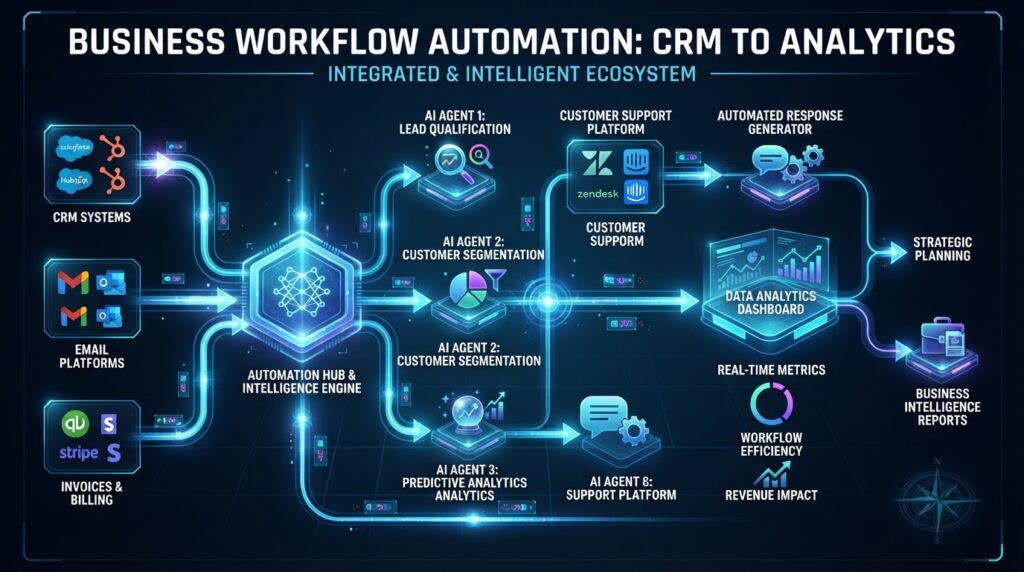
Prompt engineering has evolved beyond simple instructions. Businesses now require carefully designed prompt systems that improve consistency, accuracy, and workflow efficiency across different AI models.
An AI prompt business focuses on creating, organizing, testing, and selling high-quality prompts for specific industries or professional tasks.
Rather than offering generic prompts, successful businesses build specialized libraries tailored to real business needs.
Examples
- Marketing prompt packs
- Legal prompt collections
- Sales prompts
- HR interview prompts
- Customer support prompts
- Coding prompts
- Research prompts
- Education prompts
Delivery Formats
- PDF collections
- Notion databases
- Membership libraries
- Web applications
- Browser extensions
Revenue Models
- Individual sales
- Bundled collections
- Monthly memberships
- Corporate licensing
Startup Cost
Very Low
Recommended AI Stack
- ChatGPT
- Claude
- Gemini
- Notion
- Airtable
- Canva
Advantages
- Fast to launch
- Highly scalable
- Easy to bundle with other products
Challenges
- Generic prompts are becoming commoditized
- Continuous testing across new AI models is required
- Maintaining relevance as AI capabilities evolve
8. Develop AI Plugins & Browser Extensions
Millions of professionals use browsers, productivity apps, CRMs, design software, and collaboration platforms every day. AI-powered plugins and extensions can dramatically improve these workflows by adding intelligent features directly into existing tools.
Unlike full SaaS products, plugins are often smaller in scope and faster to build, making them an attractive option for developers and technical founders.
Examples
- AI email assistant
- AI meeting summarizer
- AI writing assistant
- AI code reviewer
- AI research companion
- AI translator
- AI shopping assistant
- AI productivity tools
Revenue Models
- Freemium
- Monthly subscription
- Lifetime license
- Enterprise licensing
Target Customers
- Developers
- Content creators
- Business professionals
- Researchers
- Students
- Marketing teams
Recommended Technology Stack
- Browser extension frameworks
- OpenAI API
- Anthropic API
- Google Gemini API
- OAuth integrations
- Cloud databases
Advantages
- Faster development compared to full SaaS
- Lower maintenance costs
- Large distribution opportunities through browser extension stores
Challenges
- Browser platform policy changes
- User acquisition
- API cost management
- Competition from built-in AI features
VEE Insight
The most successful AI extensions solve one highly specific problem exceptionally well rather than trying to become an all-in-one productivity platform.
9. Offer AI Research Services
The explosion of AI-generated content has created an unexpected challenge: information overload. Businesses, investors, researchers, journalists, and executives often struggle to identify reliable insights among the constant stream of AI news and reports.
This has created a growing market for AI research services that deliver structured, fact-based analysis instead of generic summaries.
Unlike traditional market research firms, AI-focused research businesses specialize in tracking rapidly evolving technologies, companies, funding rounds, regulations, and product launches. Their value lies in turning scattered information into actionable intelligence.
Services You Can Offer
- AI industry reports
- Competitor analysis
- AI tool evaluations
- Startup monitoring
- Technology trend reports
- Investment research
- AI vendor comparisons
- Executive briefings
Ideal Clients
- Venture capital firms
- Startups
- Enterprise innovation teams
- Consulting firms
- Universities
- Media companies
- Government organizations
Revenue Models
| Service | Revenue Model |
|---|---|
| Research Report | One-time purchase |
| Monthly Intelligence | Subscription |
| Executive Briefing | Retainer |
| Custom Research | Project-based |
Startup Cost
Low
Recommended AI Stack
- ChatGPT
- Claude
- Perplexity
- Google Gemini
- Notion
- Airtable
- Spreadsheet tools
Advantages
- Premium pricing
- Strong B2B demand
- Authority building
- Can evolve into a media brand
Challenges
- Maintaining accuracy
- Continuous monitoring
- Producing original analysis
VEE Insight
Businesses don’t pay for information—they pay for clarity. The ability to explain what matters and why is more valuable than simply collecting data.
10. Start an AI Marketing Agency

Digital marketing has become increasingly complex. Businesses now need expertise in SEO, content marketing, advertising, analytics, social media, email campaigns, and AI-powered personalization.
An AI marketing agency combines traditional marketing expertise with AI tools to improve efficiency and deliver better results.
Rather than replacing marketers, AI enables agencies to execute campaigns faster, analyze customer behavior more effectively, and optimize content at scale.
Services You Can Offer
- SEO strategy
- AI-assisted content marketing
- Paid advertising optimization
- Email marketing automation
- Social media management
- Marketing analytics
- Customer segmentation
- Conversion optimization
Target Clients
- SaaS companies
- E-commerce stores
- Local businesses
- Professional services
- Startups
- B2B companies
Revenue Models
- Monthly retainers
- Performance-based contracts
- Campaign management fees
- Consulting packages
Recommended AI Stack
- ChatGPT
- Claude
- Google Gemini
- GA4
- Microsoft Clarity
- Rank Math
- Ahrefs
- Semrush
- Canva
Advantages
- High recurring revenue
- Strong demand
- Easy service expansion
Challenges
- Client acquisition
- Keeping up with changing platforms
- Demonstrating measurable ROI
11. Build AI Solutions for Small Businesses
Large enterprises often have dedicated AI teams, but millions of small businesses do not. This creates a significant opportunity for entrepreneurs who package AI into affordable, easy-to-use solutions.
Instead of building complex enterprise software, focus on solving everyday operational challenges.
Example Solutions
- AI receptionist
- Appointment scheduling
- Invoice automation
- Customer support chatbot
- Sales assistant
- Inventory forecasting
- Employee knowledge assistant
- Email automation
Ideal Customers
- Restaurants
- Dental clinics
- Law firms
- Accounting firms
- Real estate agencies
- Retail businesses
- Local service providers
Revenue Models
- Setup fee
- Monthly subscription
- Ongoing maintenance
- Custom integrations
Advantages
- Massive target market
- Recurring revenue
- Long-term client relationships
Challenges
- Education and onboarding
- Integration with existing systems
- Technical support
12. Launch an AI Recruitment Agency
Hiring has become increasingly difficult as businesses compete for skilled talent while managing growing volumes of applications.
AI-powered recruitment agencies can improve hiring speed and candidate quality by combining human expertise with intelligent screening tools.
Rather than replacing recruiters, AI helps automate repetitive administrative tasks so recruiters can focus on interviewing, relationship building, and strategic hiring.
Services
- Resume screening
- Candidate matching
- Interview scheduling
- AI-assisted assessments
- Employer branding
- Recruitment analytics
Target Customers
- Growing startups
- Technology companies
- Healthcare organizations
- Recruitment firms
- Enterprise HR departments
Revenue Models
- Placement fees
- Monthly retainers
- Recruitment subscriptions
- Recruitment consulting
Recommended AI Stack
- ChatGPT
- Claude
- Applicant Tracking Systems (ATS)
- Calendar automation
- CRM software
Advantages
- High-value contracts
- Strong recurring demand
- Easy specialization
Challenges
- Data privacy
- Hiring bias
- Competitive market
13. Create an AI Customer Support Business

Customer support is one of the fastest-growing applications of AI.
Companies increasingly expect instant responses across websites, mobile apps, email, and messaging platforms.
An AI customer support business designs, deploys, and manages intelligent support systems that improve response times while reducing operational costs.
Services
- AI chatbot implementation
- Help center automation
- Knowledge base optimization
- Ticket classification
- Email automation
- Customer satisfaction analytics
Target Industries
- SaaS
- Retail
- Healthcare
- Financial services
- Travel
- Education
Revenue Models
- Monthly management
- Implementation projects
- AI optimization consulting
- Enterprise licensing
Advantages
- Growing demand
- Predictable recurring revenue
- High customer retention
Challenges
- Maintaining response quality
- Integration complexity
- Escalation handling
14. Start an AI Video Production Studio
Video dominates online communication, but producing high-quality content has traditionally required significant time, specialized skills, and expensive equipment.
AI has transformed this process by enabling faster editing, automated subtitles, synthetic voiceovers, script generation, avatar creation, and visual enhancement.
An AI video production studio combines creative expertise with AI-powered tools to deliver professional content more efficiently.
Services
- Marketing videos
- Product demos
- Social media content
- YouTube editing
- Training videos
- Corporate presentations
- AI avatar videos
Revenue Models
| Service | Revenue Model |
|---|---|
| Video Package | Project-based |
| Monthly Content | Subscription |
| Editing Services | Per video |
| Enterprise Production | Contract |
Recommended AI Stack
- Runway
- Synthesia
- Pika
- Kling AI
- Veo
- Adobe Premiere Pro
- ElevenLabs
Advantages
- High demand
- Premium pricing
- Strong creative differentiation
Challenges
- Rapidly evolving tools
- Client expectations
- Rendering costs
15. Launch an AI Voice & Podcast Production Business
Podcasting, audiobooks, multilingual content, and voice-based experiences continue to expand rapidly. Businesses increasingly require professional narration without the cost and scheduling challenges of traditional recording studios.
AI voice technology enables entrepreneurs to produce high-quality spoken content while maintaining consistency across multiple languages and formats.
Services
- Podcast production
- Audiobook narration
- Voice localization
- Corporate training audio
- YouTube voiceovers
- IVR systems
- Brand voice creation
Revenue Models
- Per project
- Monthly production packages
- Subscription editing
- Licensing custom voices
Recommended AI Stack
- ElevenLabs
- PlayHT
- Descript
- Adobe Audition
- ChatGPT
- Claude
Advantages
- Low operating costs
- Global customer base
- Recurring opportunities
Challenges
- Voice licensing
- Ethical considerations
- Maintaining natural quality
16. Build an AI Design Studio
Graphic design has evolved dramatically with the rise of AI-powered creative tools. Businesses no longer need weeks to develop branding assets, social media graphics, marketing materials, or presentations. Instead, they seek creative partners who can combine AI efficiency with professional design expertise.
An AI design studio focuses on delivering visually compelling assets while using AI to accelerate ideation, prototyping, and production. The competitive advantage is not simply generating images—it is understanding branding, storytelling, and user experience.
Services You Can Offer
- Brand identity design
- Marketing creatives
- Social media graphics
- Presentation design
- Website visuals
- Product mockups
- Infographics
- AI-enhanced photo editing
Ideal Clients
- Startups
- Marketing agencies
- E-commerce brands
- SaaS companies
- Content creators
- Small businesses
Revenue Models
| Service | Pricing Model |
|---|---|
| Brand Package | Fixed project |
| Social Media Design | Monthly retainer |
| Marketing Assets | Per campaign |
| Presentation Design | Project-based |
Recommended AI Stack
- Midjourney
- Adobe Firefly
- Canva AI
- Figma AI
- ChatGPT
- Photoshop
Advantages
- Strong global demand
- High creative flexibility
- Opportunities for recurring contracts
Challenges
- Maintaining originality
- Protecting brand consistency
- Managing client expectations
17. Launch an AI Data Analytics Business
Businesses collect more data than ever before, yet many struggle to convert it into meaningful insights. AI-powered analytics services help organizations identify trends, forecast outcomes, and make data-driven decisions.
Instead of replacing analysts, AI accelerates data processing, visualization, and reporting while allowing experts to focus on interpretation.
Services
- Executive dashboards
- Sales forecasting
- Customer behavior analysis
- Marketing performance reporting
- Business intelligence
- Predictive analytics
- Automated reporting
Target Clients
- Retail companies
- Financial firms
- Healthcare providers
- Manufacturing businesses
- Marketing agencies
Revenue Models
- Dashboard implementation
- Monthly analytics subscriptions
- Consulting projects
- Executive reporting
Recommended AI Stack
- Power BI
- Tableau
- ChatGPT
- Claude
- Google Gemini
- SQL
- Python
- BigQuery
Advantages
- Premium B2B pricing
- Long-term client relationships
- High demand across industries
Challenges
- Data quality
- Security requirements
- Technical expertise
18. Create AI Solutions for Healthcare

Healthcare organizations increasingly use AI to improve efficiency, documentation, patient communication, and administrative processes.
Entrepreneurs do not necessarily need to build medical diagnostic models. Many opportunities exist in workflow optimization, scheduling, documentation, and operational support.
Example Services
- Appointment automation
- Medical transcription
- Clinical documentation assistance
- Patient communication systems
- Healthcare chatbots
- Administrative workflow automation
Target Customers
- Clinics
- Hospitals
- Private practices
- Telehealth providers
Revenue Models
- Software subscriptions
- Enterprise licensing
- Implementation projects
- Ongoing support contracts
Advantages
- Large market
- High-value contracts
- Long-term partnerships
Challenges
- Regulatory compliance
- Data privacy
- Long sales cycles
19. Build AI Solutions for Finance & Accounting
Financial professionals spend significant time on repetitive tasks such as invoice processing, reconciliation, reporting, forecasting, and compliance.
AI can automate much of this work, allowing accountants and finance teams to focus on strategic decision-making.
Services
- Invoice automation
- Expense management
- Financial reporting
- Cash flow forecasting
- Budget planning
- AI bookkeeping assistance
Target Clients
- Accounting firms
- Small businesses
- CFO offices
- Financial consultants
Revenue Models
- Monthly subscriptions
- Consulting projects
- Software licensing
Recommended AI Stack
- ChatGPT
- Claude
- Excel AI
- QuickBooks integrations
- Power BI
Advantages
- High ROI for clients
- Stable recurring revenue
- Strong demand
Challenges
- Regulatory requirements
- Data security
- Financial accuracy
20. Start an AI Cybersecurity Business
As AI becomes more integrated into business operations, cybersecurity grows even more critical. Organizations need protection not only from traditional threats but also from AI-assisted attacks, deepfakes, phishing campaigns, and data breaches.
An AI cybersecurity business can help companies strengthen their defenses while using AI to detect anomalies and automate threat monitoring.
Services
- AI security assessments
- Threat detection
- Security monitoring
- Phishing simulations
- AI governance consulting
- Compliance support
Target Customers
- Enterprises
- Government organizations
- Healthcare providers
- Financial institutions
- Technology companies
Revenue Models
- Security audits
- Monthly monitoring
- Incident response retainers
- Consulting engagements
Advantages
- Growing demand
- High-value contracts
- Long-term client retention
Challenges
- Rapidly evolving threats
- Technical specialization
- Compliance requirements
21. Create AI-Powered Legal Services
Legal professionals manage enormous volumes of documents, contracts, and regulatory requirements. AI can streamline many administrative tasks while leaving legal judgment to qualified professionals.
Services
- Contract review assistance
- Legal document drafting
- Compliance tracking
- Case research support
- Client intake automation
- Knowledge management
Target Clients
- Law firms
- In-house legal teams
- Startups
- Corporate compliance departments
Revenue Models
- SaaS subscriptions
- Consulting
- Implementation services
- Enterprise licensing
Advantages
- High-value niche
- Strong efficiency gains
- Growing AI adoption
Challenges
- Legal liability
- Accuracy requirements
- Regulatory changes
22. Develop AI Sales Enablement Solutions
Sales teams spend significant time on prospect research, CRM updates, email drafting, follow-ups, and reporting. AI can automate these repetitive tasks and help representatives focus on building relationships and closing deals.
Services
- AI sales assistants
- Prospect research
- Personalized email generation
- CRM automation
- Meeting summaries
- Sales forecasting
Target Customers
- B2B SaaS companies
- Sales agencies
- Enterprise sales teams
- Startups
Revenue Models
- SaaS subscriptions
- Sales consulting
- Monthly retainers
- Enterprise contracts
Advantages
- Clear business ROI
- Large addressable market
- Strong recurring revenue potential
Challenges
- CRM integration complexity
- Data quality
- User adoption
23. Build AI Solutions for Education
Education is rapidly transforming as AI helps personalize learning, automate assessments, and support teachers with lesson planning and administrative tasks.
Services
- Personalized tutoring
- Learning assistants
- Quiz generation
- Lesson planning
- Student progress analytics
- AI-powered LMS enhancements
Target Customers
- Schools
- Universities
- Online education companies
- Corporate learning departments
Revenue Models
- Subscription software
- Institutional licensing
- Course packages
- Consulting
Advantages
- Expanding global market
- Positive social impact
- Recurring institutional revenue
Challenges
- Privacy regulations
- Curriculum alignment
- Teacher adoption
24. Launch an AI Productivity Platform
Knowledge workers increasingly rely on multiple applications to manage projects, notes, meetings, tasks, and communication. AI productivity platforms unify these workflows, helping individuals and teams save time while improving organization.
Potential Features
- Smart task management
- Meeting summaries
- Email prioritization
- Knowledge search
- Workflow automation
- Team collaboration
Revenue Models
- Freemium
- Monthly subscription
- Team plans
- Enterprise licensing
25. Build an Industry-Specific AI Startup
One of the strongest opportunities is to specialize rather than compete broadly.
Instead of building a generic AI platform, focus on solving problems within a single industry where domain expertise creates a meaningful competitive advantage.
Example Niches
- Real estate
- Construction
- Manufacturing
- Agriculture
- Logistics
- Hospitality
- Insurance
- Human resources
- Architecture
- Veterinary services
The future of AI entrepreneurship belongs to founders who deeply understand the industries they serve.
Common Mistakes to Avoid When Starting an AI Business
Launching an AI business has never been more accessible, but accessibility also means competition is growing rapidly. Every week, new startups enter the market, yet many struggle to gain traction—not because AI lacks potential, but because they overlook fundamental business principles.
Understanding these common mistakes can save entrepreneurs months of wasted effort and significantly improve their chances of building a sustainable company.
Mistake #1: Building AI Instead of Solving a Problem
One of the biggest misconceptions among first-time founders is believing that AI itself is the product.
Customers rarely buy AI because it is innovative. They buy solutions that help them save time, reduce costs, increase revenue, improve accuracy, or eliminate repetitive work.
Instead of asking:
“How can I use AI?”
Ask:
“What business problem can AI solve better than existing solutions?”
The technology should support the business—not define it.
Mistake #2: Trying to Serve Everyone
Many startups fail because they target an audience that is too broad.
A product designed for “all businesses” often resonates with no one.
Successful AI companies typically begin with a specific niche.
Examples include:
- AI for dentists
- AI for law firms
- AI for real estate agencies
- AI for accounting firms
- AI for Shopify stores
- AI for content marketers
A focused market allows founders to understand customer pain points more deeply and build stronger products.
Mistake #3: Ignoring Customer Feedback
Founders sometimes spend months building features they believe customers want without validating those assumptions.
The better approach is to launch a simple version of the product, gather feedback early, and improve continuously.
Your first customers are not just buyers—they are your most valuable source of product insight.
Mistake #4: Depending on a Single AI Provider
Many businesses build their entire product around one AI model or API.
While this can accelerate development, it also creates dependency.
Providers may change:
- Pricing
- Rate limits
- Available models
- Terms of service
- Features
A more resilient architecture supports multiple providers or allows easier migration if needed.
Mistake #5: Underestimating AI Costs
Although AI development is more affordable than ever, usage costs can increase rapidly as customer numbers grow.
Entrepreneurs should monitor:
- API costs
- Cloud hosting
- Storage
- Vector databases
- Monitoring tools
- Customer support
Understanding unit economics early helps prevent unpleasant surprises as the business scales.
Mistake #6: Neglecting Data Privacy and Security
AI applications often process sensitive business information.
Customers increasingly expect:
- Secure infrastructure
- Transparent privacy policies
- Responsible data handling
- Compliance with relevant regulations
Trust is becoming one of the strongest competitive advantages in AI.
Mistake #7: Competing Only on Price
Lower pricing may attract initial users, but sustainable businesses compete through value rather than discounts.
Companies are willing to pay more for solutions that:
- Save significant time
- Increase revenue
- Reduce operational risk
- Improve decision-making
The strongest competitive advantage is measurable business impact.
AI Business Trends to Watch (2026–2030)

Artificial intelligence is evolving rapidly, and entrepreneurs who understand long-term trends will be better positioned to build resilient businesses.
Rather than chasing every new model release, founders should focus on structural shifts that are likely to shape the industry over the next several years.
1. AI Agents Will Transform Knowledge Work
AI assistants are evolving into autonomous agents capable of planning, executing tasks, collaborating with software, and managing increasingly complex workflows.
Businesses will demand:
- Sales agents
- Research agents
- Coding agents
- Marketing agents
- Finance agents
- Customer support agents
Companies that build specialized agent solutions for specific industries are likely to see strong growth.
2. Vertical AI Will Outperform Generic AI
Generic AI platforms are becoming widely available.
The next wave of opportunity lies in industry-specific solutions.
Examples include:
- AI for healthcare
- AI for legal services
- AI for manufacturing
- AI for construction
- AI for logistics
- AI for education
Deep domain expertise will become a key competitive advantage.
3. AI Automation Will Become Standard
Organizations increasingly view automation as a business necessity rather than an experimental initiative.
Routine processes involving documents, emails, customer service, reporting, scheduling, and internal knowledge management will continue moving toward AI-assisted workflows.
Businesses that help organizations implement these systems will benefit from long-term demand.
4. Human Expertise Will Become More Valuable
Contrary to popular belief, AI is increasing—not decreasing—the value of experienced professionals.
Customers still need people who can:
- Make strategic decisions
- Validate outputs
- Build relationships
- Understand industry regulations
- Exercise sound judgment
The most successful entrepreneurs will combine AI capabilities with deep human expertise.
5. AI Infrastructure Will Continue Expanding
Behind every AI application is an ecosystem of infrastructure providers, including cloud platforms, vector databases, monitoring systems, security tools, orchestration frameworks, and developer platforms.
This creates opportunities beyond end-user applications.
Entrepreneurs can build businesses that support the broader AI ecosystem itself.
How to Choose the Right AI Business Idea
With so many opportunities available, selecting the right business model can feel overwhelming. The best choice depends on your skills, resources, goals, and the problems you are uniquely positioned to solve.
Before committing to an idea, ask yourself the following questions.
Do You Have Industry Expertise?
Founders with experience in a specific industry often identify opportunities that outsiders miss.
For example, a former accountant may recognize repetitive workflows that can be automated, while a healthcare professional may understand administrative challenges that AI can streamline.
Your existing knowledge is often a stronger competitive advantage than technical expertise alone.
Do You Prefer Services or Products?
There is no universally “best” business model.
Service businesses such as consulting or agencies typically generate revenue more quickly and require lower upfront investment.
Product businesses, including SaaS platforms and digital products, generally take longer to develop but offer greater scalability and recurring revenue potential.
Many successful companies begin as service businesses and later evolve into software products after validating customer needs.
Can You Reach Your Target Customers?
Even the strongest product will struggle without a clear path to potential customers.
Before investing heavily in development, consider:
- Where your audience spends time
- How they discover solutions
- Whether they actively search for your service
- How much customer acquisition is likely to cost
A simple solution with an accessible market often outperforms a sophisticated product that lacks effective distribution.
Validate Before You Build
One of the most valuable lessons for AI entrepreneurs is to validate demand before committing significant time or resources.
A landing page, prototype, consultation offer, or small pilot project can provide meaningful feedback long before a full product is built.
Early validation reduces risk and helps ensure you are solving a problem customers are genuinely willing to pay for.
Frequently Asked Questions (FAQ)
What is the most profitable AI business to start in 2026?
There isn’t a single answer because profitability depends on your skills, target market, execution, and customer demand. However, AI SaaS businesses, AI automation agencies, AI consulting firms, and industry-specific AI solutions currently offer some of the highest long-term revenue potential due to recurring income and scalability.
Can I start an AI business without coding?
Yes.
Many successful AI businesses don’t require advanced programming skills.
Examples include:
- AI consulting
- AI content agencies
- AI marketing agencies
- AI education businesses
- Prompt libraries
- AI automation services using no-code platforms
- Digital product businesses
Modern AI tools and automation platforms have significantly lowered the technical barrier to entry.
How much money do I need to start an AI business?
Startup costs vary depending on the business model.
| Business | Estimated Startup Cost |
|---|---|
| AI Consulting | Very Low |
| AI Agency | Low |
| Prompt Business | Very Low |
| AI Digital Products | Very Low |
| AI SaaS | Medium |
| AI Marketplace | Medium–High |
Many entrepreneurs begin with less than $1,000 by leveraging subscription-based AI tools instead of building infrastructure from scratch.
Is AI SaaS still worth building?
Absolutely.
While competition has increased, businesses continue searching for AI software that solves industry-specific problems.
Vertical AI SaaS products often outperform generic AI applications because they provide specialized workflows and deeper domain knowledge.
Which industries have the biggest AI opportunities?
Some of the fastest-growing industries include:
- Healthcare
- Finance
- Legal Services
- Education
- Manufacturing
- Marketing
- Human Resources
- Logistics
- Real Estate
- Customer Support
These sectors generate enormous amounts of repetitive work that AI can help automate.
What skills are most valuable for AI entrepreneurs?
Successful AI founders often combine technical awareness with strong business fundamentals.
Key skills include:
- Problem-solving
- Customer research
- Marketing
- Sales
- Product thinking
- Communication
- Project management
- AI tool proficiency
Understanding customer needs is frequently more valuable than advanced programming expertise.
Can AI replace entrepreneurs?
No.
AI accelerates execution, but entrepreneurs remain responsible for identifying opportunities, building relationships, making strategic decisions, and creating products customers genuinely value.
AI is a powerful business tool—not a replacement for entrepreneurial thinking.
What is the biggest mistake new AI founders make?
Many founders focus on technology before validating customer demand.
The strongest businesses start with a real problem, validate that customers are willing to pay for a solution, and then use AI to deliver that solution more effectively.
Should I build my own AI model?
For most startups, the answer is no.
Building foundation models requires enormous resources.
Instead, successful startups often use existing AI platforms through APIs and concentrate on creating better user experiences, specialized workflows, and industry expertise.
How do I find my first customers?
Start by engaging with communities where your target audience already spends time.
Effective channels include:
- Industry forums
- Professional associations
- Online communities
- Email outreach
- Educational content
- Webinars
- SEO-focused content marketing
Early customer conversations often provide more value than expensive advertising campaigns.
Your First 30 Days: An AI Business Launch Roadmap
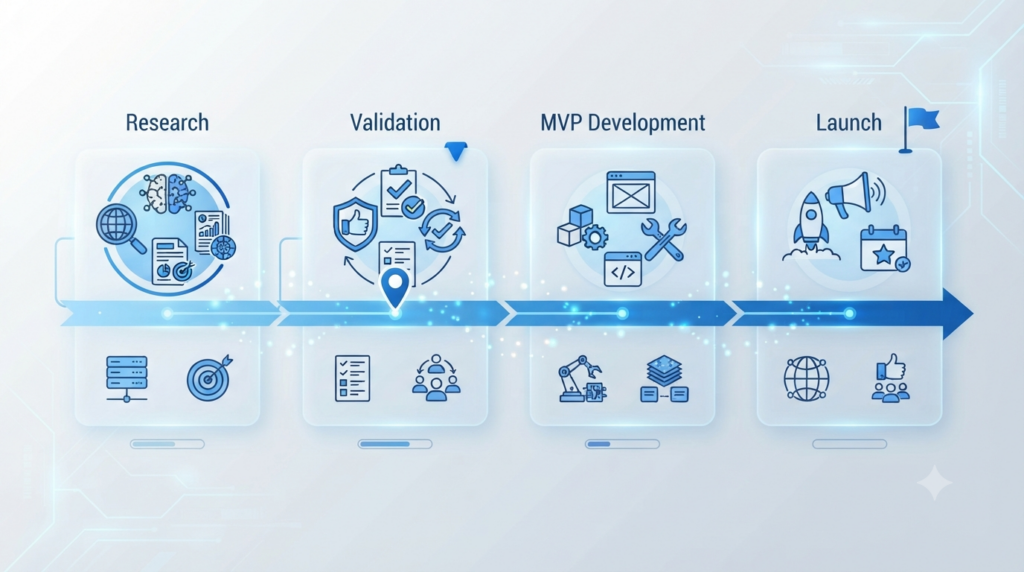
Starting an AI business can feel overwhelming, but breaking the process into manageable steps makes progress much more achievable.
Week 1: Identify a Real Problem
- Research your target industry.
- Interview potential customers.
- Identify repetitive, expensive, or inefficient workflows.
- Validate that businesses are actively seeking solutions.
Week 2: Define Your Solution
- Choose one clear problem to solve.
- Outline your value proposition.
- Select the AI tools or platforms you’ll use.
- Create a simple prototype or service offering.
Week 3: Validate Demand
- Build a landing page.
- Collect email sign-ups.
- Demonstrate your solution.
- Gather feedback from early users.
- Refine your offer based on real-world responses.
Week 4: Launch Your Minimum Viable Business
- Publish your website.
- Begin reaching out to potential customers.
- Share educational content.
- Collect testimonials.
- Continue improving based on user feedback.
Remember: your first version doesn’t need to be perfect. It needs to solve a meaningful problem well enough that customers are willing to pay for it.
Final Thoughts

Artificial intelligence is reshaping how businesses operate, but the greatest opportunity doesn’t lie in simply adopting AI—it lies in applying it thoughtfully to solve real-world problems.
The most successful AI companies of the coming decade won’t necessarily be those with the largest engineering teams or the newest models. They’ll be the organizations that deeply understand their customers, focus on measurable outcomes, and continually adapt as technology evolves.
Whether your goal is to launch an AI SaaS platform, build an automation agency, create digital products, offer consulting services, or specialize in a specific industry, the principles remain the same:
- Start with a real customer problem.
- Validate demand before scaling.
- Combine AI with human expertise.
- Build systems that create lasting value.
- Continuously improve based on customer feedback.
The AI revolution is still in its early stages. For entrepreneurs willing to learn, experiment, and execute, 2026 presents one of the most exciting opportunities to build businesses that are both profitable and impactful.
The best time to start isn’t when every detail is perfect—it’s when you’ve identified a problem worth solving and are ready to take the first step.
Key Takeaways
- AI is enabling entrepreneurs to launch businesses with lower startup costs and greater scalability than ever before.
- The strongest opportunities focus on solving specific customer problems rather than showcasing technology.
- Recurring revenue models such as SaaS, subscriptions, and managed services offer long-term growth potential.
- Industry expertise combined with AI creates a durable competitive advantage.
- Continuous learning, customer feedback, and responsible AI practices are essential for sustainable success.
What’s Next?
If you’re serious about building an AI business, continue exploring the Vynula AI Business hub, where you’ll find in-depth guides on:
- How to Start an AI SaaS Business
- AI Automation for Small Businesses
- Best AI Tools for Entrepreneurs
- AI Marketing Strategies
- AI Startup Funding Guide
- AI Business Case Studies
- AI Productivity Workflows
Each guide is designed to help you move from idea to execution with practical, actionable insights.
External Links
| Anchor | URL |
|---|---|
| OpenAI | https://openai.com |
| Anthropic | https://www.anthropic.com |
| Google AI | https://ai.google |
| Microsoft AI | https://www.microsoft.com/ai |
| NVIDIA AI | https://www.nvidia.com/ai |
| Hugging Face | https://huggingface.co |
| Stanford HAI | https://hai.stanford.edu |
| MIT Technology Review AI | https://www.technologyreview.com |
| McKinsey AI | https://www.mckinsey.com/capabilities/quantumblack |
| Gartner AI | https://www.gartner.com |
Related Articles
- Best AI Research Tools in 2026: The Ultimate Guide for Researchers, Students & Professionals
- Best AI Writing Tools in 2026: The Ultimate Guide for Content Creators, Marketers & Businesses
- Best AI Coding Tools in 2026: The Ultimate Guide for Developers
- Best AI Image Generators in 2026 (Free & Paid): The Tools Redefining Digital Creativity
- Best AI Video Generators in 2026: The Tools Transforming AI Video Creation Forever
- Best AI Voice Generators (2026): The Ultimate Guide to AI Voice Creation
- What Is AI Workflow Automation? (2026): The Complete Beginner’s Guide
- What Is Agentic AI? (2026): The Complete Beginner’s Guide
- What Is Model Context Protocol (MCP)? AI Standard Connecting Modern AI Systems
- ChatGPT Models Explained (2026): Complete Guide to OpenAI’s AI Models
- Claude AI Models Explained (2026): Choosing Between Haiku, Sonnet, Opus & Claude Code
- Gemini Models Explained (2026): Complete Guide to Google’s AI Model Family
- ChatGPT vs Claude vs Gemini: Which AI Is Best in 2026?
- Claude vs ChatGPT (2026): Which AI Assistant Is Better?
- Google Gemini vs ChatGPT: Which AI Is Better in 2026?
- How to Use ChatGPT Like a Pro in 2026: 10 Powerful Strategies That Actually Work