

Introduction
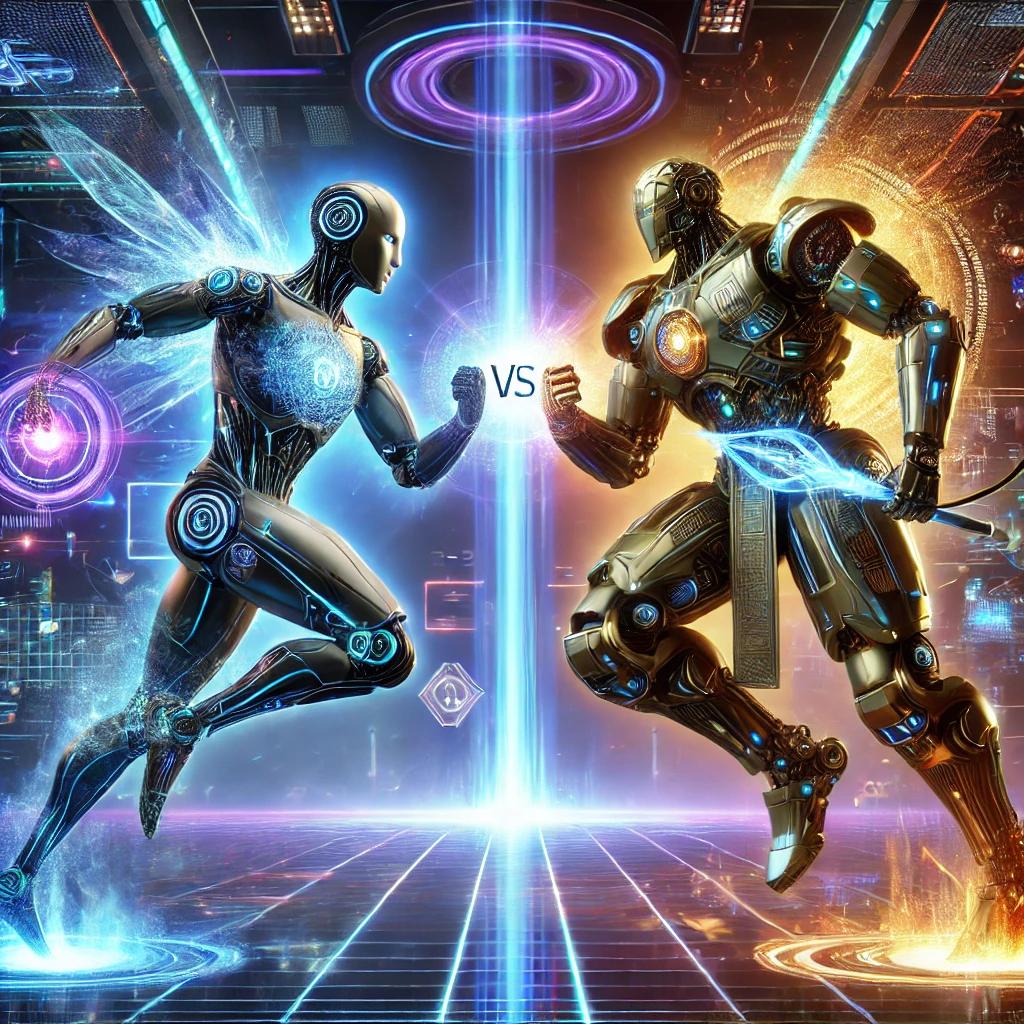
In 2026, the debate around ChatGPT vs Claude vs Gemini has reached a new peak as AI assistants have become deeply embedded in work, education, coding, and everyday productivity. What used to be simple chatbot comparisons has now evolved into a full-scale competition between three of the most powerful large language models in the world: OpenAI’s ChatGPT, Anthropic’s Claude, and Google’s Gemini.
These models are no longer just answering questions—they’re writing code, generating research-level analysis, building apps, and even acting as autonomous agents. The question is no longer “which AI is good?” but rather which AI is best for your specific needs in 2026.
In this deep-dive, we break down performance, reasoning ability, creativity, ecosystem strength, and real-world usability to determine who truly leads the AI race today.
The Evolution of AI Assistants in 2026
The AI landscape has changed dramatically in just a few years. What started as text-based assistants has now become multi-modal, agent-driven ecosystems capable of handling complex workflows.
From chatbots to AI agents
Modern AI tools are no longer limited to conversation:
- They execute tasks across apps
- Analyze documents at scale
- Generate full software projects
- Handle multimodal inputs (text, image, audio, video)
Why this matters in 2026
The competition between ChatGPT, Claude, and Gemini is not just about intelligence anymore—it’s about ecosystem integration and real-world utility.
ChatGPT vs Claude vs Gemini: Core Differences
This is where the competition becomes most interesting. Each model has developed a distinct identity.
ChatGPT (OpenAI)
OpenAI’s ChatGPT remains the most widely adopted AI assistant globally.
Strengths:
- Strong reasoning and coding ability
- Advanced tool use (agents, browsing, workflows)
- Massive ecosystem (plugins, APIs, integrations)
- Strong developer adoption
Weaknesses:
- Sometimes less conservative in factual tone
- Can prioritize fluency over strict accuracy in niche cases
Claude (Anthropic)
Anthropic’s Claude has positioned itself as the “safe, thoughtful AI.”
Strengths:
- Extremely strong long-context understanding
- Excellent at document analysis and summarization
- More cautious and aligned responses
- Great for enterprise workflows
Weaknesses:
- Slightly less aggressive in tool usage
- Fewer consumer-facing integrations compared to competitors
Gemini (Google)
Google’s Gemini benefits heavily from deep integration into Google’s ecosystem.
Strengths:
- Powerful multimodal capabilities
- Strong integration with Google Workspace
- Excellent real-time information access
- Fast responses and scalable infrastructure
Weaknesses:
- Developer ecosystem still catching up
- Inconsistent performance across tasks compared to ChatGPT
Performance Comparison: Reasoning, Creativity & Coding
When comparing ChatGPT vs Claude vs Gemini, performance varies depending on the task.
1. Reasoning Ability
- ChatGPT: Strong structured reasoning and logical problem solving
- Claude: Excellent deep reasoning over long documents
- Gemini: Fast reasoning, but sometimes less consistent in complex chains
👉 Winner: ChatGPT (overall balance)
2. Creativity & Content Generation
- ChatGPT: Highly versatile, strong storytelling
- Claude: More refined, cautious tone
- Gemini: Good but less stylistically expressive
👉 Winner: ChatGPT
3. Coding & Technical Tasks
- ChatGPT: Industry-leading coding assistant with strong debugging
- Claude: Strong at explaining code and architecture
- Gemini: Improving rapidly, especially with Google Cloud tools
👉 Winner: ChatGPT
Real-World Use Cases: Which AI Fits Your Needs?
For Developers
- Best choice: ChatGPT
- Why: Strong APIs, coding intelligence, debugging support
For Researchers & Analysts
- Best choice: Claude
- Why: Handles long documents, academic reasoning, and structured summaries
For Everyday Users & Productivity
- Best choice: Gemini
- Why: Deep Google integration (Docs, Gmail, Search)
Pricing, Ecosystem & Accessibility
ChatGPT
- Free + paid tiers
- Strong API ecosystem
- Widely available across platforms
Claude
- Focus on premium reasoning features
- Strong enterprise adoption
- Limited but growing integrations
Gemini
- Deep integration with Google services
- Often bundled with Workspace and Android features
- Strong accessibility for general users
Internal Ecosystem Advantage: The Hidden Winner Factor
One of the biggest deciding factors in 2026 is not model intelligence—but ecosystem lock-in.
- ChatGPT dominates developer ecosystems and startups
- Claude dominates enterprise knowledge workflows
- Gemini dominates consumer productivity via Google services
This makes direct comparison harder, because each AI is becoming the center of its own digital universe.
Which AI Is Best in 2026?
So, who actually wins the ChatGPT vs Claude vs Gemini battle?
The answer depends on what “best” means:
- Best overall AI assistant: ChatGPT
- Best for long-context reasoning: Claude
- Best for everyday productivity: Gemini
If you look at raw capability, flexibility, and ecosystem expansion, ChatGPT still holds a slight edge in 2026. However, Claude and Gemini are closing the gap fast in their specialized domains.
In reality, 2026 is not about a single winner—it’s about multi-AI usage, where users combine different models for different tasks.
Conclusion
The rivalry between ChatGPT, Claude, and Gemini represents more than just competition—it reflects the evolution of AI itself. As these systems continue to improve, the line between tools and intelligent agents is disappearing.
For users, the real advantage lies in understanding when to use each AI rather than choosing just one. The future of AI is not single-platform dominance—it’s intelligent collaboration across ecosystems.
One thing is certain: the race between OpenAI, Anthropic, and Google is only getting started.