



Last updated: August 22, 2026 — verified against Anthropic’s official model and pricing announcements.
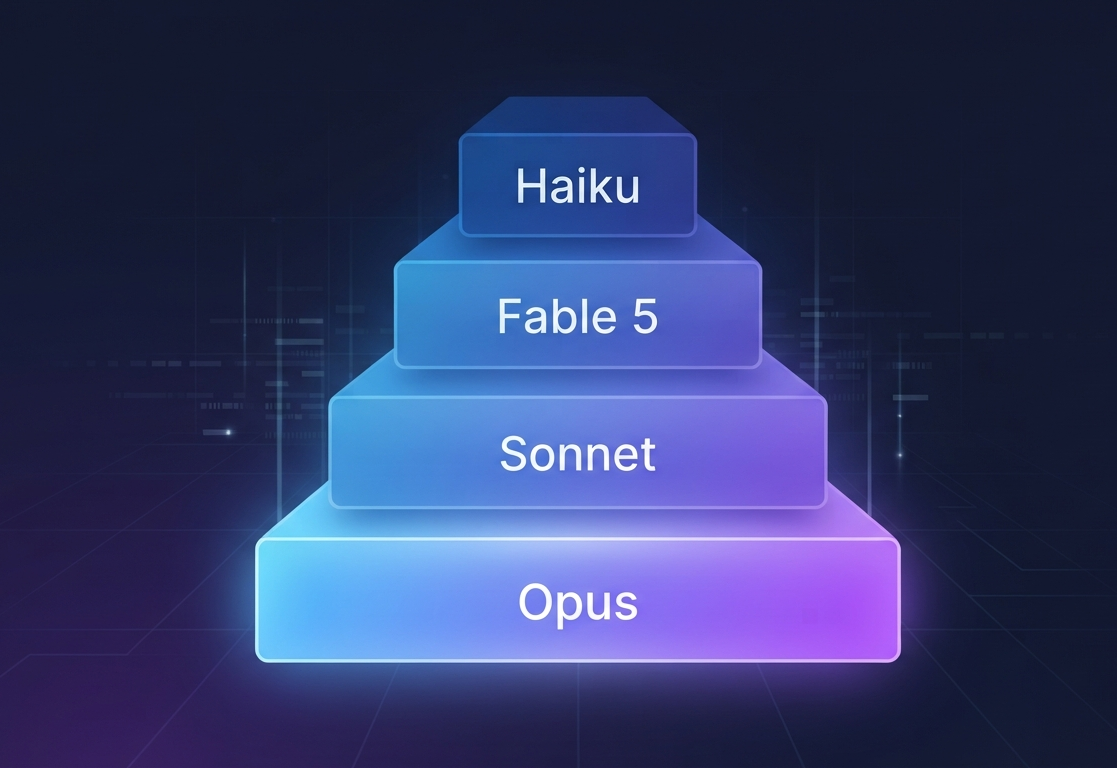
Anthropic’s Claude lineup now spans several distinct tiers. For most users, the practical choices are Claude Sonnet 5 for balanced everyday work, Claude Opus 5 for harder coding and long-running agentic tasks, Claude Haiku 4.5 for fast and cost-sensitive workloads, and Claude Fable 5 for the most demanding generally available tasks. This guide explains the differences, current API pricing, and which model fits which workload.
Current Claude Model Lineup
Claude Sonnet 5 launched on June 30, 2026 and is Anthropic’s default model for Free and Pro users. Anthropic positions it as a strong daily model for coding, agents and professional work, with performance that can approach Opus 4.8 on some tasks at lower cost.
Claude Opus 5 launched on July 24, 2026 and replaced Opus 4.8 as Anthropic’s newest Opus model. It is the default on Claude Max and the strongest model available on Claude Pro. Anthropic says it improves coding, knowledge work and long-running agentic workflows while keeping the same base API price as Opus 4.8.
Claude Haiku 4.5 remains the lower-cost, latency-focused option. It is well suited to high-volume classification, routing, chat and sub-agent workloads where speed and cost matter.
Claude Fable 5 is Anthropic’s most capable generally available model above the Opus tier. It launched in June 2026, was temporarily suspended after a U.S. government export-control directive, and was restored globally on July 1, 2026. Anthropic also announced Claude Mythos 5, but Mythos access is restricted to selected trusted-access programs rather than general use.
Claude Opus vs Sonnet vs Haiku vs Fable
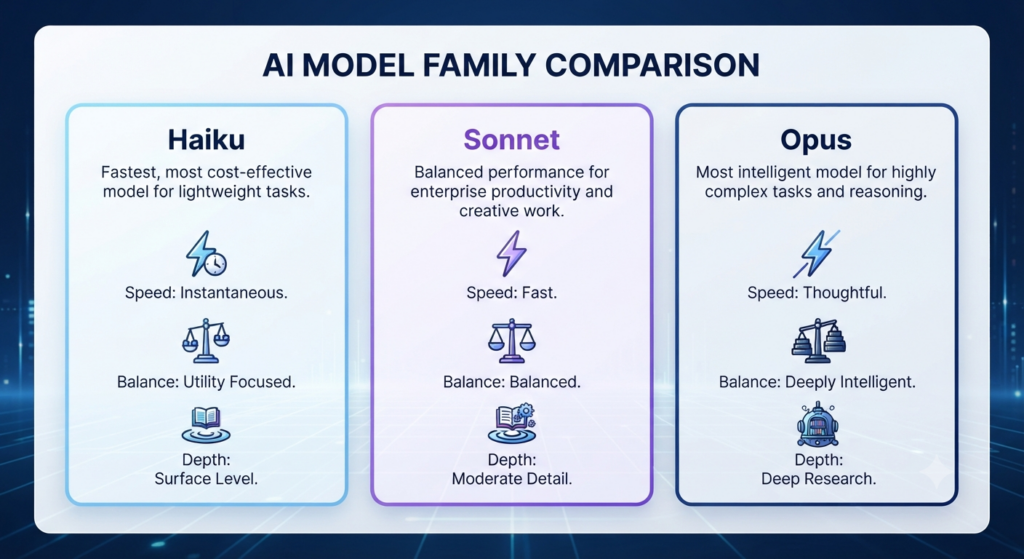
- Sonnet 5: best general-purpose choice for everyday coding, research, document work and production agents.
- Opus 5: best fit when difficult coding, long agent runs or professional reasoning justify a higher-cost model.
- Haiku 4.5: best fit for high-volume or latency-sensitive tasks.
- Fable 5: best reserved for exceptionally difficult tasks where additional capability beyond Opus can materially change the result.
Claude API Pricing in August 2026

| Model | Input / 1M tokens | Output / 1M tokens |
|---|---|---|
| Claude Haiku 4.5 | $1 | $5 |
| Claude Sonnet 5 — introductory through Aug. 31, 2026 | $2 | $10 |
| Claude Sonnet 5 — standard from Sept. 1, 2026 | $3 | $15 |
| Claude Opus 5 | $5 | $25 |
| Claude Fable 5 | $10 | $50 |
These are Anthropic’s published base API rates. Prompt caching, batch processing, fast modes, U.S.-only inference and platform-specific billing can change effective costs, so production buyers should confirm the current Anthropic pricing page before budgeting.
Which Claude Model Should You Use?
For most professional workloads, start with Sonnet 5. Move up to Opus 5 when the task is difficult enough that better reasoning, coding consistency or long-running agent behavior matters more than the extra cost. Use Haiku 4.5 for scaled, latency-sensitive workloads. Consider Fable 5 selectively for the hardest generally available workloads rather than as a routine default.
How Claude Compares With GPT-5.6 and Gemini

The market changes quickly enough that there is no single universal winner. OpenAI’s GPT-5.6 family spans Sol, Terra and Luna, while Google’s Gemini lineup has continued evolving through the Gemini 3.x generation. Choose by the task, ecosystem, latency requirements, data controls and current price rather than assuming that one vendor wins every workload.
FAQ
Is Claude Opus 5 newer than Opus 4.8? Yes. Anthropic launched Opus 5 on July 24, 2026. It is the current Opus generation and keeps the same published base API price of $5 per million input tokens and $25 per million output tokens.
Is Claude Sonnet 5 the default model? Anthropic says Sonnet 5 is the default for Free and Pro plans. It is also available on Max, Team, Enterprise, Claude Code and the Claude Platform.
Is Claude Fable 5 generally available? Yes. Anthropic restored global access on July 1, 2026. Mythos 5 is different: its access remains restricted to selected trusted-access programs.