


OpenAI has recently introduced a new wave of updates across its AI ecosystem, continuing its rapid development cycle in 2026. These changes focus not only on model improvements but also on how users interact with ChatGPT and how enterprise systems integrate AI into daily workflows.
While this is not a single “one-model release,” the update reflects a broader shift in OpenAI’s direction: more personalization, stronger enterprise tools, and deeper integration into real-world applications.
⚡ Key Changes in the Latest OpenAI Update
1. Smarter and More Personalized ChatGPT Experience

One of the most important changes is the improvement in how ChatGPT uses memory and context.
OpenAI has enhanced the system so that it can:
- Remember user preferences across conversations
- Use past interactions more effectively
- Deliver more personalized responses
This makes ChatGPT feel less like a tool and more like a continuous assistant.
2. New GPT Model Improvements (GPT-5.5 Era)
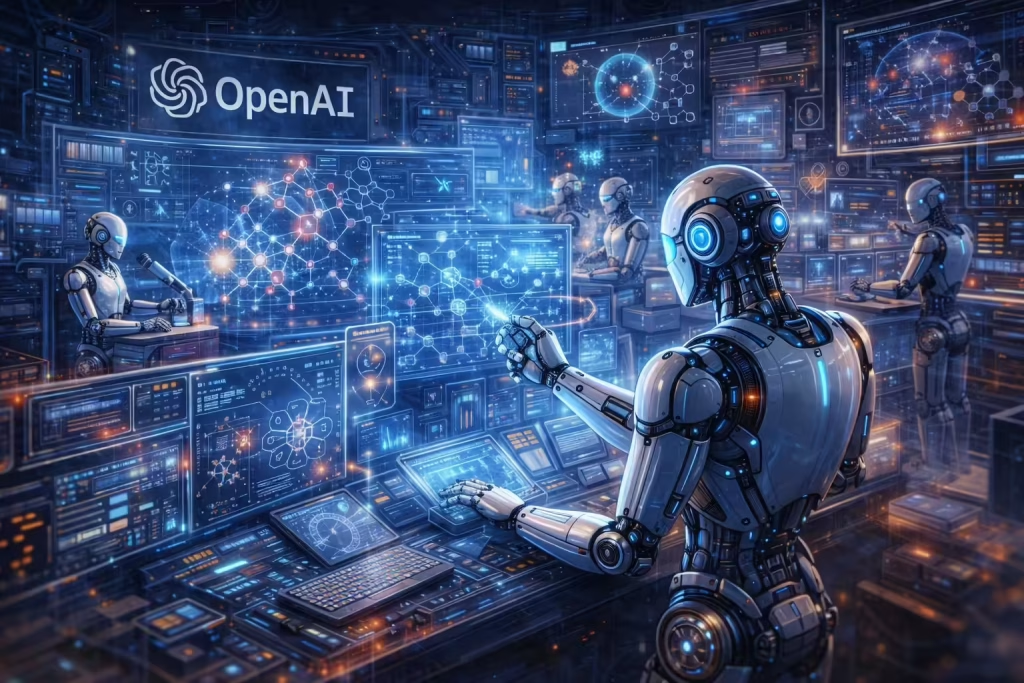
Recent model updates such as GPT-5.5 and its variants focus on:
- Better reasoning ability
- Reduced factual errors
- Faster response times
- Improved performance in professional tasks
These models are part of OpenAI’s ongoing effort to make AI more reliable in real-world business and research environments.
3. “Scheduled Tasks” Feature in ChatGPT

A major usability update introduced the ability to schedule tasks inside ChatGPT.
This means users can now:
- Set reminders or automated AI actions
- Schedule recurring tasks
- Receive notifications from ChatGPT
This turns ChatGPT into a more proactive productivity assistant rather than a purely reactive chatbot.
4. Enterprise-Level Control and Analytics

OpenAI has also improved its enterprise offering with:
- Advanced usage analytics
- Better cost and spending controls
- More transparency for AI usage inside companies
This is especially important for businesses scaling AI across teams.
5. Strategic Shift: AI as an “Assistant, Not Replacement”

OpenAI leadership has also emphasized a clear direction:
The goal is not full automation of humans, but enhancing human decision-making.
This reflects a broader industry trend where AI is positioned as a supportive intelligence layer rather than a full replacement of human work.
💡 What This Means for the AI Industry
These updates show a clear direction:
- AI is becoming more personalized
- More deeply embedded into daily workflows
- And increasingly focused on enterprise adoption
The competition between OpenAI, Google, and Anthropic continues to accelerate, pushing rapid innovation across the entire sector.
🔥 Conclusion
The latest OpenAI updates are not just about new models — they represent a shift toward a more integrated, intelligent, and productivity-focused AI ecosystem.
As AI continues to evolve, tools like ChatGPT are moving closer to becoming everyday digital assistants rather than simple chat interfaces.