

Introduction
Multi-agent systems are the reason Claude Code can plan, write, and review code in the same session, and why customer support platforms can quietly hand a billing question off to a technical specialist mid-conversation. A multi-agent system is what you get when a single AI agent genuinely isn’t enough for the job — when a task benefits from specialization, parallel work, or one agent checking another’s output. This guide explains what multi-agent systems actually are, the patterns that dominate production in 2026, their real costs, and when a single well-built agent is still the smarter choice.
Table of Contents
- What Is a Multi-Agent System?
- The Five Patterns That Dominate Production
- The A2A Protocol: How Agents Talk to Each Other
- The Real Cost of Multi-Agent Systems
- When NOT to Use a Multi-Agent System
- Real-World Use Cases
- Choosing a Pattern: A Practical Framework
- FAQ
1. What Is a Multi-Agent System?
A multi-agent system is an architecture in which two or more LLM-driven agents — each with a distinct role, prompt, model tier, or tool set — coordinate to complete a task that a single agent would handle worse, slower, or not at all. The agents have to differ in at least one meaningful dimension, and the system as a whole has to accomplish something a single agent genuinely couldn’t do as well alone. Simply running the same prompt three times isn’t a multi-agent system; giving three agents different roles, tools, or areas of expertise and having them collaborate is.
2. The Five Patterns That Dominate Production
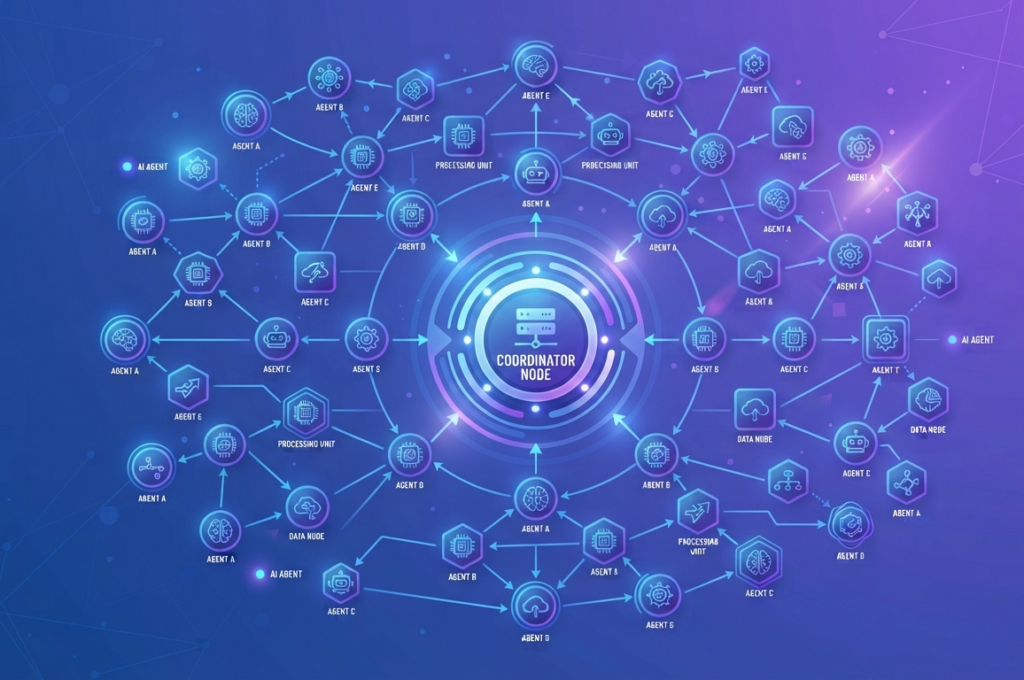
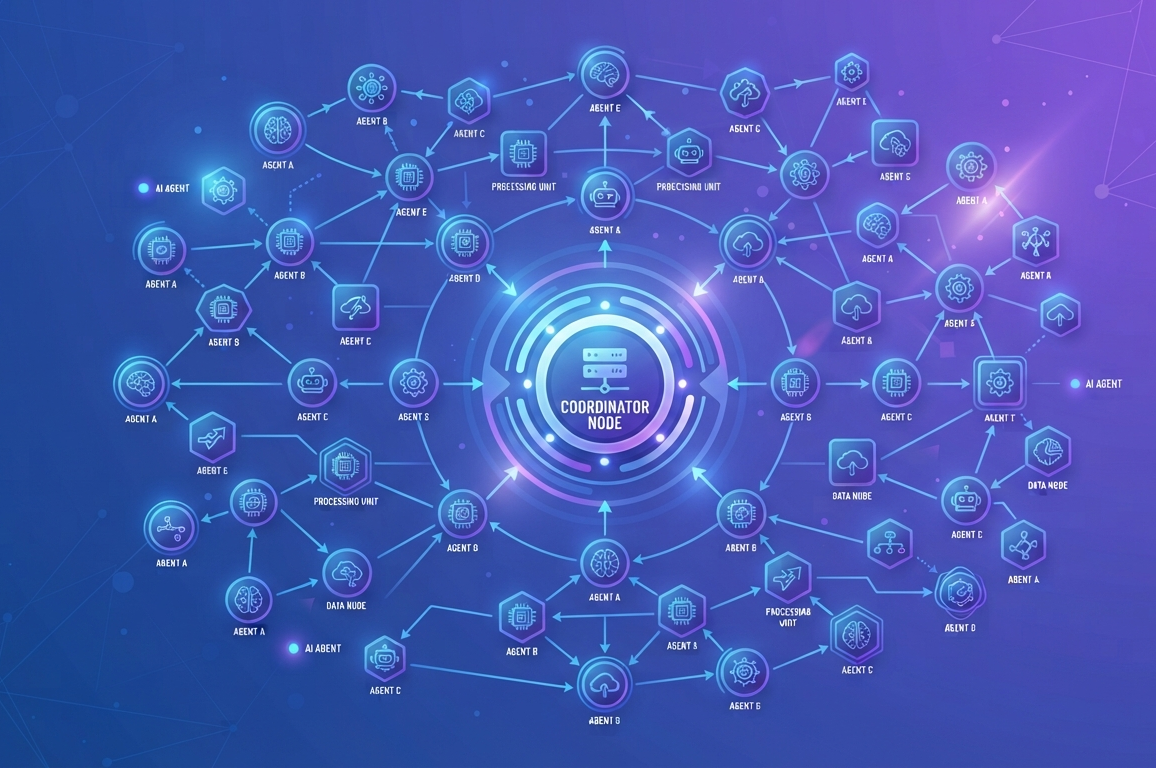
Supervisor / orchestrator-worker. A central agent receives the goal, applies AI planning to break it into subtasks, routes each one to a specialist worker, and synthesizes the results. Worker agents don’t talk to each other directly — all coordination passes through the supervisor, which makes debugging far easier since every decision is traceable to one place. This is by far the most common pattern in production today.
Hierarchical. Nested layers of supervisors manage their own specialist agents, scaling the supervisor/worker idea to complex, multi-domain problems that a single flat supervisor would struggle to route cleanly.
Pipeline. Agents execute in a predefined linear chain, each one processing the previous agent’s output through shared state. The order is fixed at design time, which makes this pattern predictable and easy to reason about — but a mistake in an early stage cascades through every stage after it with no way to backtrack.
Peer-to-peer / handoff. Each agent assesses the current task and decides whether to handle it or transfer control to a more appropriate specialist, with no central coordinator. This suits situations where you genuinely can’t predict which specialist a task will need until you’re partway through it — a support conversation that starts as a billing question and turns out to be a technical issue, for example.
Swarm. Peer agents read and write to a shared space (a database, vector store, or coordination bus) and each decide individually what to do next, with no central control at all. This pattern came out of robotics and ant-colony optimization research, and in 2026 it’s the rarest of the five for general-purpose work — but it’s the right shape for genuinely parallel, large-scale jobs like data labelling or distributed research, where debuggability matters less than raw throughput.
3. The A2A Protocol: How Agents Talk to Each Other
Agent2Agent (A2A) is an open standard for cross-agent communication that works across all of the patterns above, regardless of which framework or vendor built each individual agent. Before a shared protocol like this, getting agents built on different frameworks to coordinate reliably meant custom integration work for every pairing. A2A matters because production multi-agent systems increasingly mix agents from different vendors and frameworks rather than staying inside one ecosystem end to end.
4. The Real Cost of Multi-Agent Systems
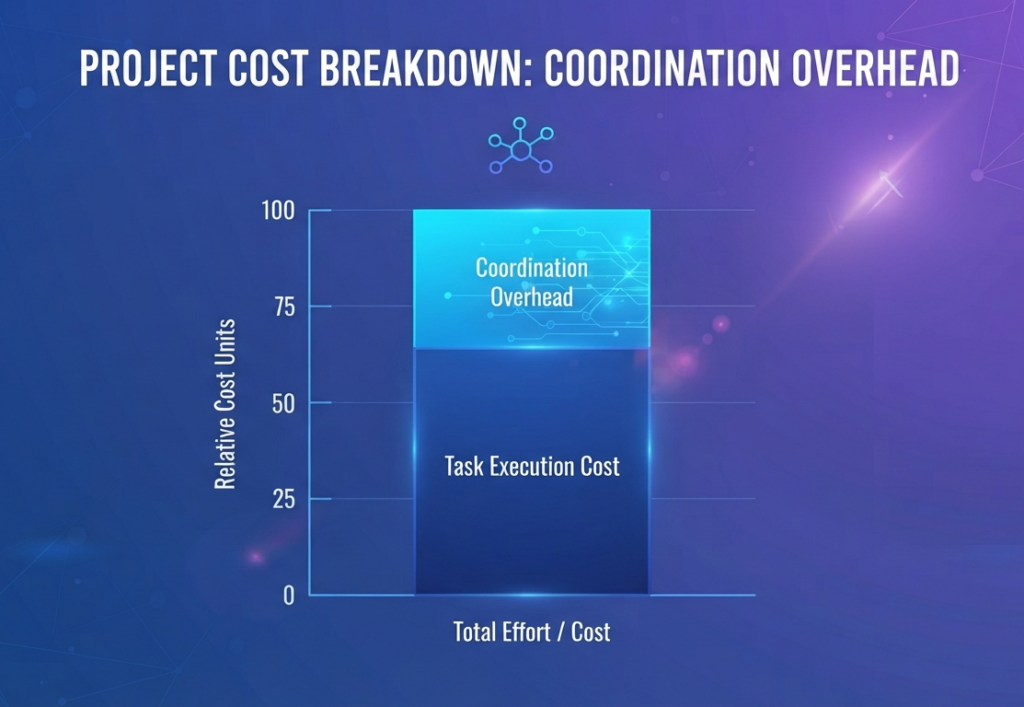
This is the part vendors don’t lead with. Multi-agent setups carry real token and latency overhead on top of whatever the underlying task would cost a single agent — every decomposition step, every hand-off, and every result-synthesis step is an additional model call. A four-agent pipeline can accumulate close to a full second of pure coordination overhead before any of the actual task processing happens. This overhead compounds badly at scale: a workflow that costs a few cents in testing can balloon into a five-figure monthly bill once it’s running at high volume, purely from the orchestrator’s decomposition and aggregation calls stacking up across every single execution.
The practical takeaway: multi-agent architecture only pays for itself when a task genuinely benefits from specialization, parallelism, or one agent critiquing another’s work — not as a default starting point for anything with more than one step.
5. When NOT to Use a Multi-Agent System
Given the cost overhead above, it’s worth being explicit about the failure modes:
- Error propagation. In a pipeline, a bad output at stage one cascades through every downstream stage with no backtracking built in.
- Infinite handoff loops. In peer-to-peer designs, Agent A can pass to B, B to C, and C back to A, with no task ever actually getting resolved.
- Diminishing returns as base models improve. Recent research directly comparing single-agent and multi-agent architectures has found that the advantage of adding more agents shrinks as the underlying model gets stronger — meaning the honest first move is often “make one agent better” rather than “add another agent.”
If your task is a single, well-defined job with a clear success criterion, a well-built single agent is usually cheaper, faster to debug, and no less capable.
6. Real-World Use Cases
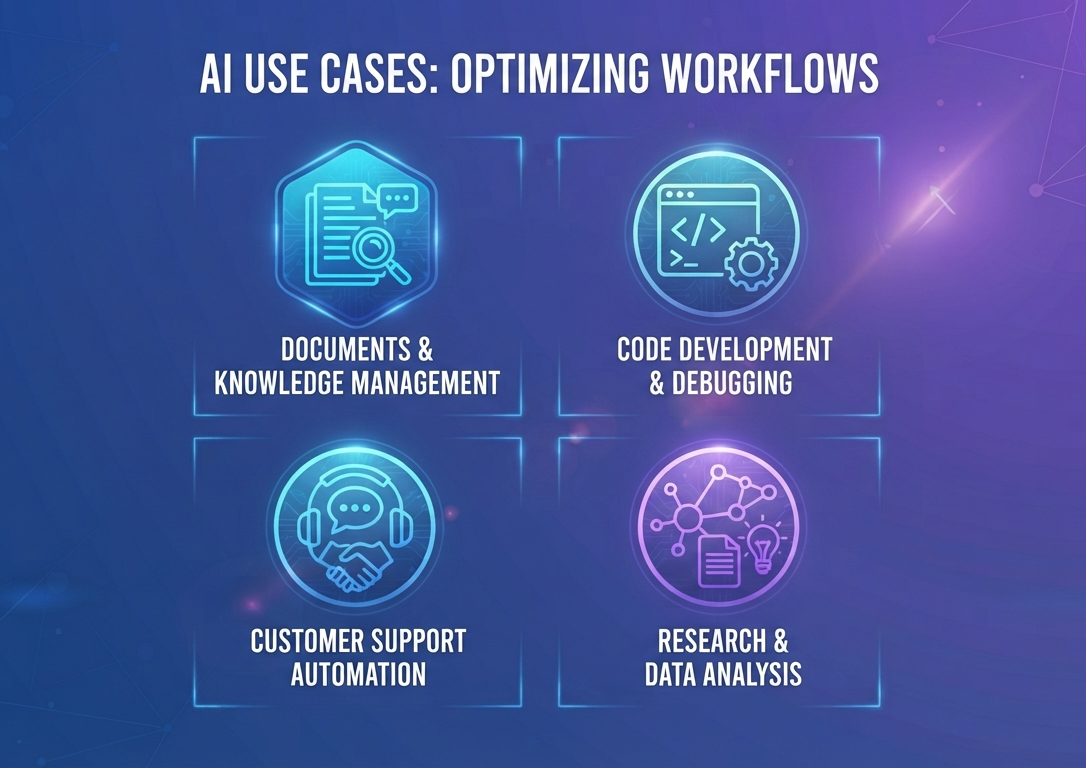
AI coding assistants. Claude Code and similar tools internally decompose a coding request into subtasks — planning, writing, reviewing — delegated to specialized subagents, typically using an orchestrator-worker structure under the hood.
Document and contract processing. Law firms and enterprises use pipeline patterns for tasks like contract generation: template selection, clause customization, compliance review, and risk assessment, each handled by a dedicated agent in sequence.
Customer support. Peer-to-peer handoff patterns let a conversation move fluidly from a general agent to a billing specialist to a technical specialist as the real nature of the issue becomes clear mid-conversation, rather than forcing the customer to restart with the right department from the start.
Multi-model research and reasoning platforms. Some 2026 platforms coordinate more than a dozen specialized models through a central reasoning engine, using supervisor-style orchestration to route different sub-questions to the model best suited to answer them.
7. Choosing a Pattern: A Practical Framework
- Do subtasks need a single point of coordination and easy debugging? Supervisor/orchestrator-worker is the production default for good reason.
- Is the problem naturally multi-domain and too large for one supervisor to route cleanly? Go hierarchical.
- Is the workflow linear with clear, fixed stages? Pipeline is simpler to reason about — just design in validation checkpoints to catch errors early rather than late.
- Can you not predict which specialist a task needs until you’re partway through it? Peer-to-peer handoff fits this shape better than a rigid pipeline.
- Is the job embarrassingly parallel at real scale (hundreds of independent units of work)? Swarm is the only pattern built for that, at the cost of harder debugging.
- Would a single, well-built agent actually do this fine? Ask this question first, every time — it’s the cheapest and most reliable path when the answer is yes.
FAQ
What’s the difference between a multi-agent system and just running multiple prompts? A multi-agent system requires the agents to differ in at least one meaningful way — role, tools, model tier, or specialization — and to genuinely need each other to complete the task. Running the same prompt several times in parallel isn’t a multi-agent system; it’s just repeated single-agent execution.
Is orchestrator-worker really the most common pattern? Yes — it’s the dominant pattern in 2026 production deployments, largely because routing all coordination through a single supervisor makes the system dramatically easier to debug and audit than fully decentralized alternatives.
Do multi-agent systems always perform better than a single agent? No, and this is one of the most important things to get right. As underlying models have gotten more capable, the performance gap between single-agent and multi-agent approaches on many tasks has narrowed, while the token and latency overhead of coordination remains real. Multi-agent only earns its cost on tasks that genuinely benefit from specialization or parallel work.
What is the A2A protocol and do I need it? Agent2Agent (A2A) is an open standard that lets agents built on different frameworks or by different vendors communicate with each other. You need it mainly if your multi-agent system spans more than one framework or vendor; if everything runs inside a single framework’s own agent-to-agent primitives, you may not need a separate protocol layer at all.
Conclusion
Multi-agent systems solve a real problem — tasks that genuinely need specialization, parallelism, or one agent checking another’s work — but they’re not a free upgrade over a single well-built agent. The five dominant patterns (supervisor/orchestrator-worker, hierarchical, pipeline, peer-to-peer, and swarm) each fit a different shape of problem, and the honest 2026 finding is that coordination overhead is real and the performance gap over single agents keeps narrowing as base models improve. The right first question isn’t “which pattern should I use” — it’s “does this task actually need more than one agent at all.”
Related Vynula Guides
Official Source Package
- Anthropic (Building Effective Agents / orchestrator-workers pattern) — https://www.anthropic.com/
- Google (A2A protocol) — https://deepmind.google/