



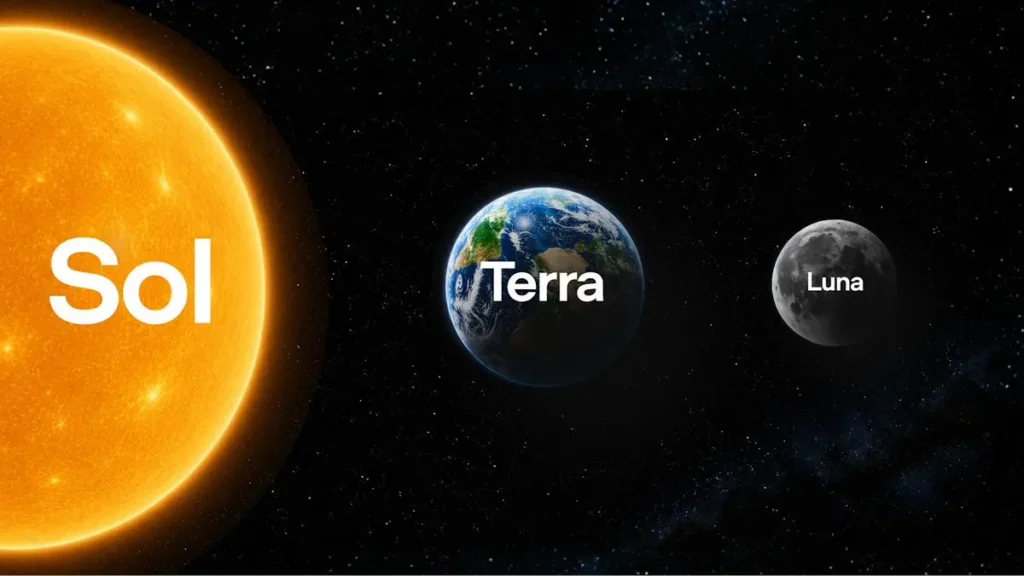
OpenAI has officially introduced the GPT-5.6 family, its most advanced generation of AI models to date. The new lineup includes three distinct models—Sol, Terra, and Luna—each designed for different performance, pricing, and reasoning needs.
The announcement marks another major milestone in the AI race, as OpenAI continues pushing the boundaries of coding, scientific research, autonomous AI agents, and enterprise applications. While the models are currently available only to a limited group of trusted partners through the API and Codex, OpenAI says broader access, including ChatGPT integration, is coming soon.
With competitors like Google, Anthropic, and xAI rapidly improving their own AI models, GPT-5.6 represents OpenAI’s biggest effort yet to maintain its leadership in artificial intelligence.
GPT-5.6 Introduces Three AI Models for Different Needs
Rather than releasing a single flagship model, OpenAI has introduced a complete AI family under the GPT-5.6 name.
Each model targets a different type of user, balancing intelligence, speed, and cost.
GPT-5.6 Sol: OpenAI‘s Most Powerful AI Yet
The flagship Sol model is built for the most demanding workloads.
According to OpenAI, Sol delivers significant improvements in:
- Advanced coding
- Scientific reasoning
- Biology research
- Cybersecurity analysis
- Multi-step problem solving
- Autonomous AI agent workflows
One of its standout additions is a new Maximum Reasoning mode, designed to improve performance on highly complex tasks requiring deeper logical thinking.
OpenAI has also introduced an Ultra Mode, allowing Sol to coordinate multiple sub-agents for sophisticated workflows that involve planning, execution, and verification.
Terra Delivers High Performance at a Lower Cost
Not every AI application requires maximum reasoning power.
That’s where GPT-5.6 Terra comes in.
Built for Everyday AI Applications
OpenAI describes Terra as offering performance comparable to GPT-5.5 while costing approximately 50% less.
This makes it an attractive option for:
- Business applications
- AI assistants
- Customer service
- Productivity software
- Enterprise automation
For developers balancing performance and operating costs, Terra could become one of the most practical choices in the GPT-5.6 lineup.
Luna Becomes OpenAI’s Most Affordable Model
The third model, GPT-5.6 Luna, focuses on affordability.
Despite being OpenAI’s lowest-cost model so far, Luna is designed to maintain strong overall performance across common AI tasks.
Optimized for Scale
Luna targets applications that require:
- Fast responses
- High request volumes
- Lower operating costs
- Large-scale deployment
This makes it particularly attractive for startups, SaaS companies, and developers building AI-powered products for millions of users.
GPT-5.6 Brings Stronger AI Safety Features
Beyond performance improvements, OpenAI says GPT-5.6 Sol includes its strongest safety protections yet.
Enhanced Security Against High-Risk Requests
According to the company, Sol has been reinforced to better resist:
- High-risk misuse
- Sensitive cybersecurity requests
- Harmful instructions
- Real-world attack scenarios
OpenAI also says the model underwent extensive testing to identify vulnerabilities before release.
The stronger security framework reflects the industry’s growing focus on balancing increasingly capable AI systems with responsible deployment.
API Access Starts Before ChatGPT Rollout
For now, GPT-5.6 isn’t available to everyone.
Limited Preview Access
OpenAI has begun providing access through:
- OpenAI API
- Codex
- Trusted enterprise partners
- Selected organizations
Because the models remain in preview, most ChatGPT users won’t see them immediately.
However, OpenAI has confirmed that wider availability, including integration into ChatGPT, is planned in the near future.
Why GPT-5.6 Matters in the AI Race
The launch of GPT-5.6 comes at a time when competition among AI companies has never been more intense.
Google continues expanding Gemini, Anthropic is advancing Claude, and xAI is developing Grok for real-time reasoning and social integration.
Instead of relying on a single universal model, OpenAI is now offering specialized options tailored to different workloads and budgets.
A More Flexible AI Ecosystem
By introducing Sol, Terra, and Luna, OpenAI gives developers greater flexibility when choosing the right balance between:
- Intelligence
- Speed
- Cost
- Scalability
- Security
This strategy could make GPT-5.6 more appealing across consumer, enterprise, and research environments.
Conclusion
The GPT-5.6 family represents OpenAI’s most ambitious AI release to date.
With Sol delivering cutting-edge reasoning capabilities, Terra offering enterprise-grade performance at lower cost, and Luna making AI more affordable than ever, OpenAI is expanding its platform beyond a single flagship model.
Just as importantly, the company is pairing these performance improvements with stronger security protections and broader deployment options.
As GPT-5.6 gradually rolls out to ChatGPT and more developers, the competition between OpenAI, Google, Anthropic, and other AI leaders is likely to accelerate even further—bringing faster innovation and more powerful AI tools to businesses, developers, and everyday users alike.